Adult Entry
Ages 18+
€38per person
- Dated entry to the palace state apartments
- Multilingual audio guide included
- Access to the free Baroque gardens
- Official e-ticket to your phone
- 24/7 concierge in your language — before, during and after your visit
Berlin · Baroque Royal Residence
Gilded galleries, a porcelain cabinet of thousands, and gardens fit for a queen — reserved for you with audio guide included and entry confirmed in minutes.
Weekend and summer afternoon slots fill fast — reserve your day now to avoid the on-site queue.
Admission
Both fares open the same state apartments and carry the same audio guide; the reduced fare simply needs proof at the door.
Ages 18+
€38per person
Students & eligible concessions (no senior discount)
€28per person
Pick your visit date and admission time on the next screen — the palace admits in timed groups.
The 55-hectare gardens cost nothing to enter and are never sold as a ticket; wander them before or after the rooms.
Booking through this desk
The estate, room by room
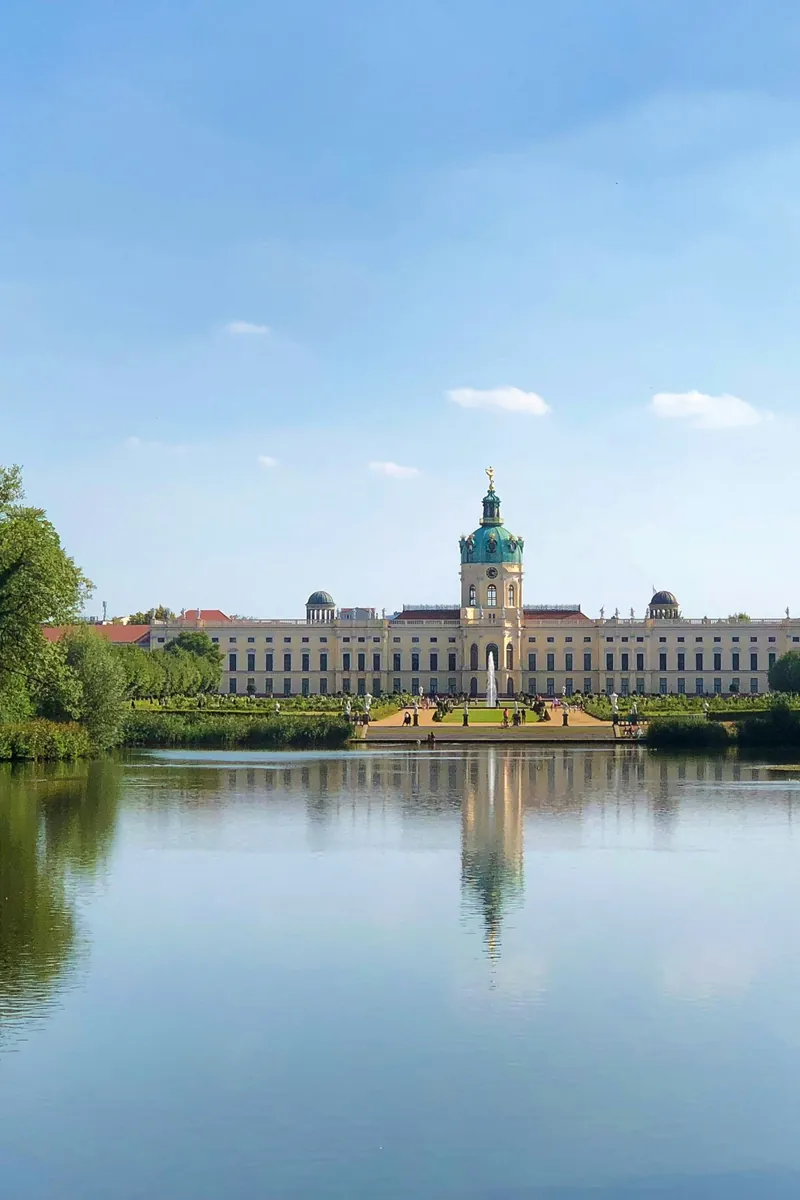
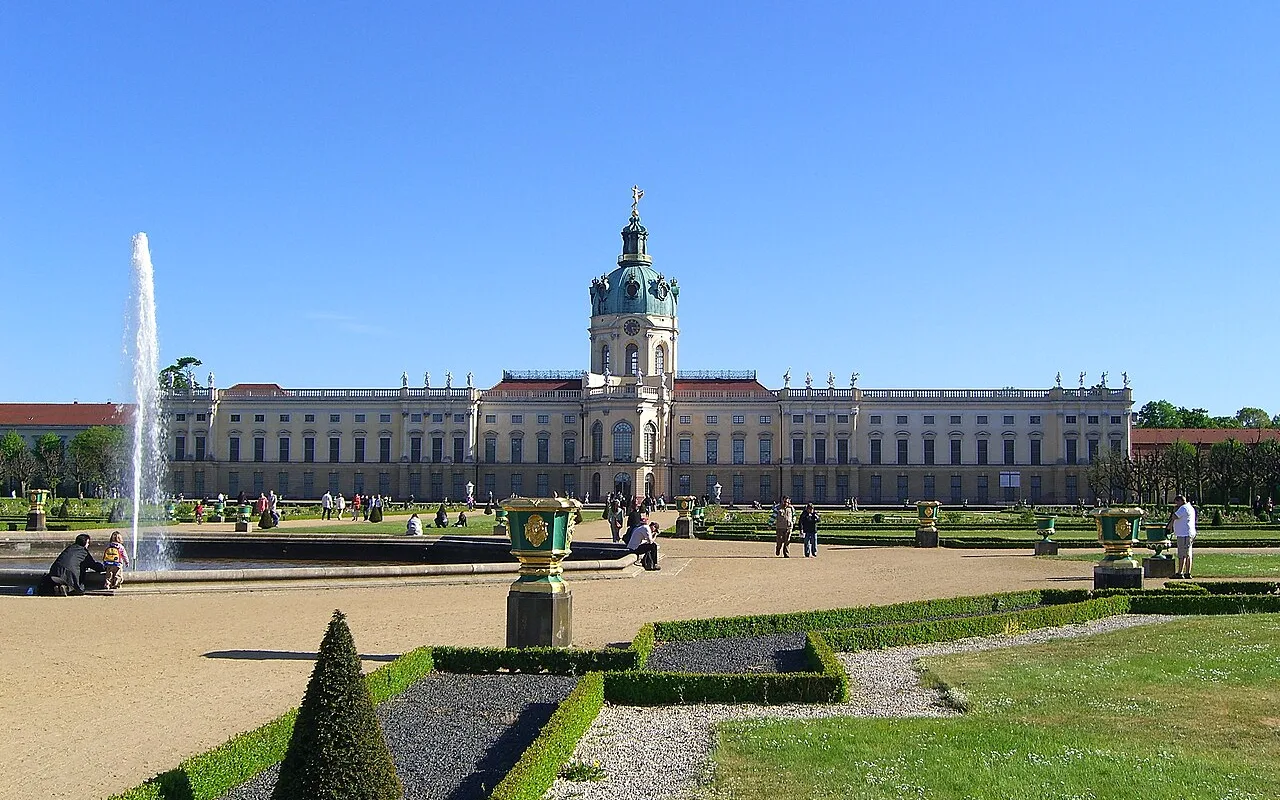
Charlottenburg is the largest royal palace in Berlin and the city's most complete survival of Prussian Baroque splendour. Commissioned in 1695 as a summer retreat for Sophie Charlotte — the brilliant, music-loving consort who gave the estate its name — it grew across the eighteenth century into a sprawling residence of state apartments, a glittering ballroom and intimate private rooms, each one a window into how Prussia's kings and queens actually lived.
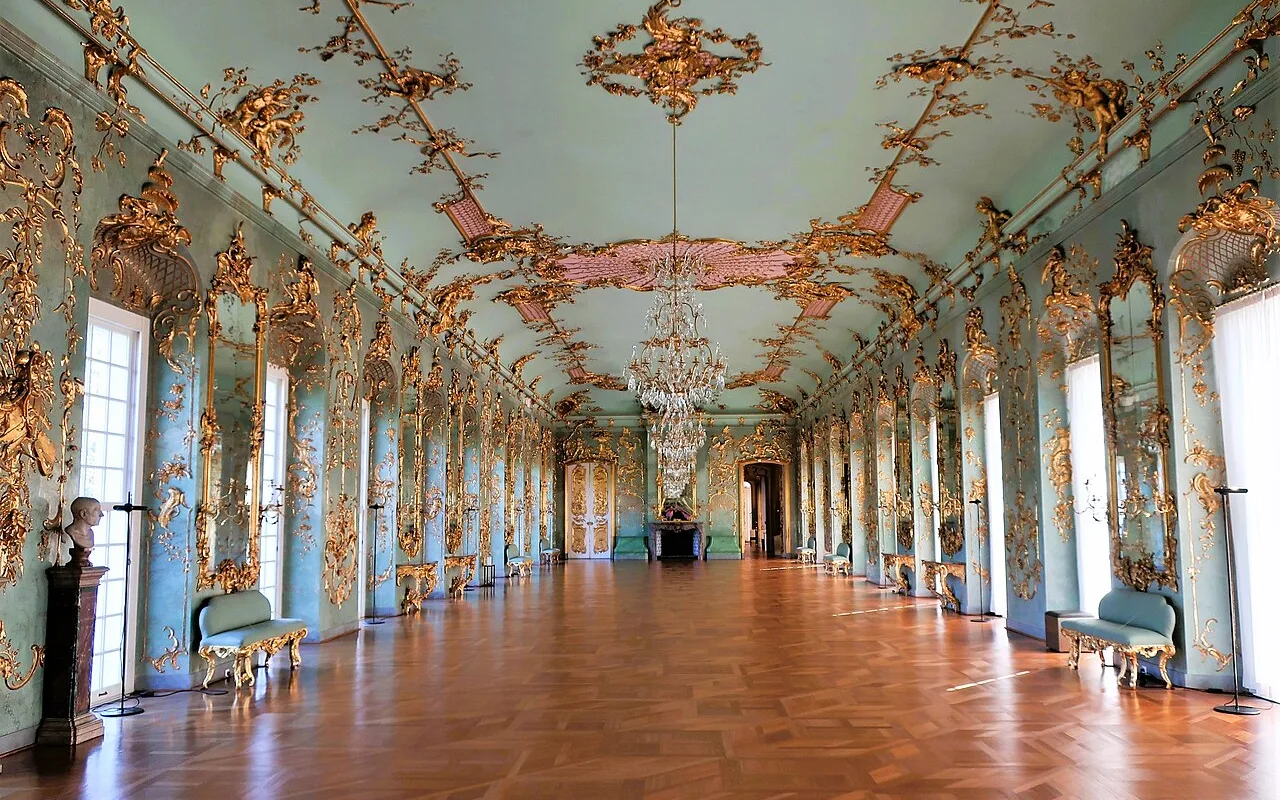
Inside, the highlights come thick and fast. The Porcelain Cabinet glows with thousands of pieces of blue-and-white Chinese and Japanese porcelain stacked floor to ceiling, while the Golden Gallery — a 42-metre rococo ballroom of mirrors, gilding and pale green — is one of the most photographed interiors in Berlin. Further on, the New Wing holds the lavish apartments of Frederick the Great and a celebrated collection of eighteenth-century French painting.
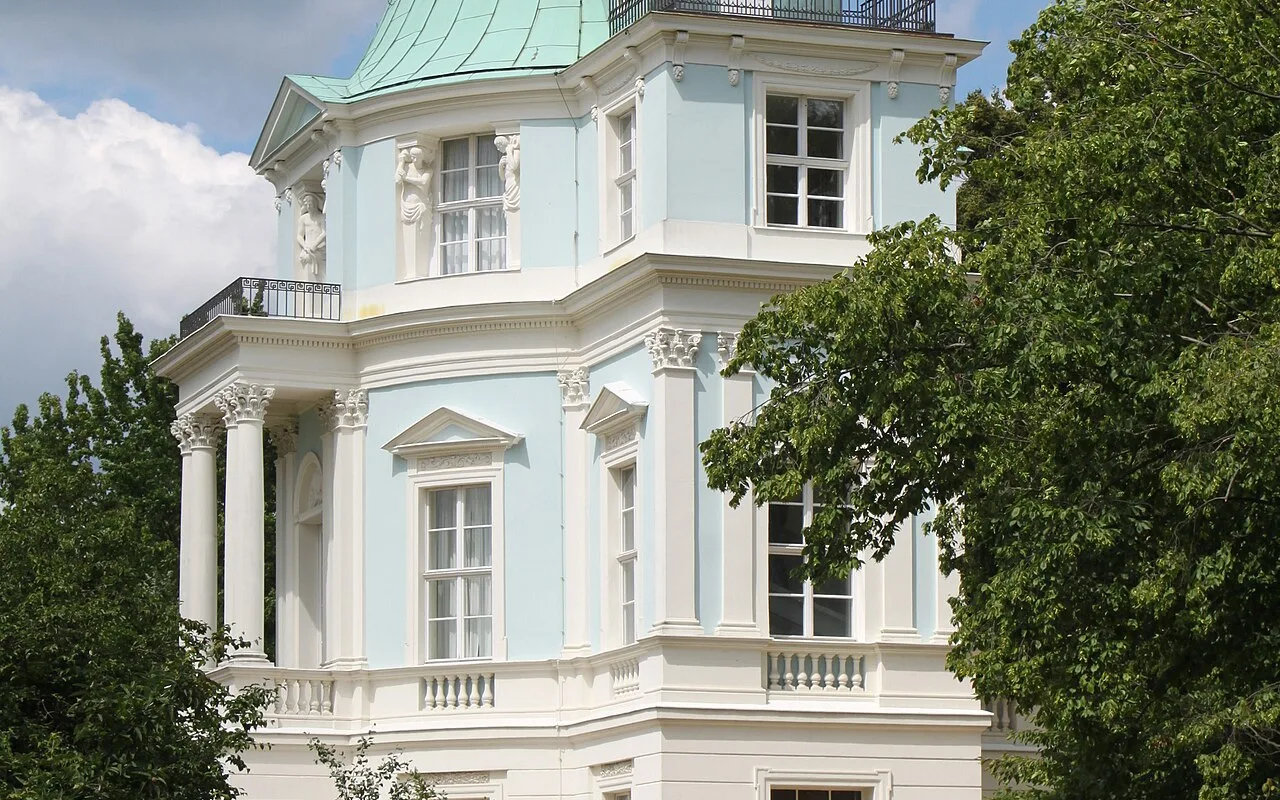
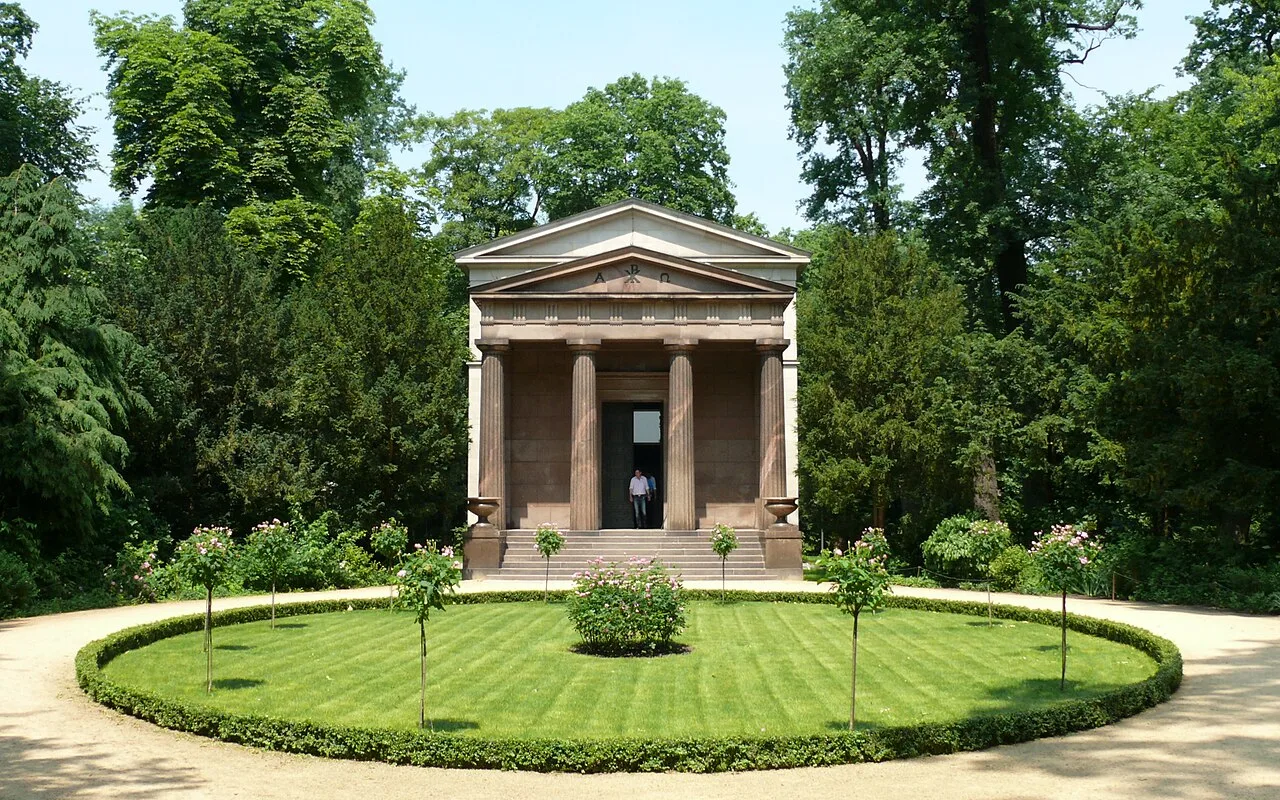
Beyond the palace walls lie 55 hectares of gardens, laid out first in formal French style and later softened into an English landscape park threaded with lakes and shaded avenues. Dotted among them are a domed mausoleum, a neoclassical garden pavilion and a Belvedere teahouse — and the grounds are free to wander, making the estate a full day out for the price of a single ticket.
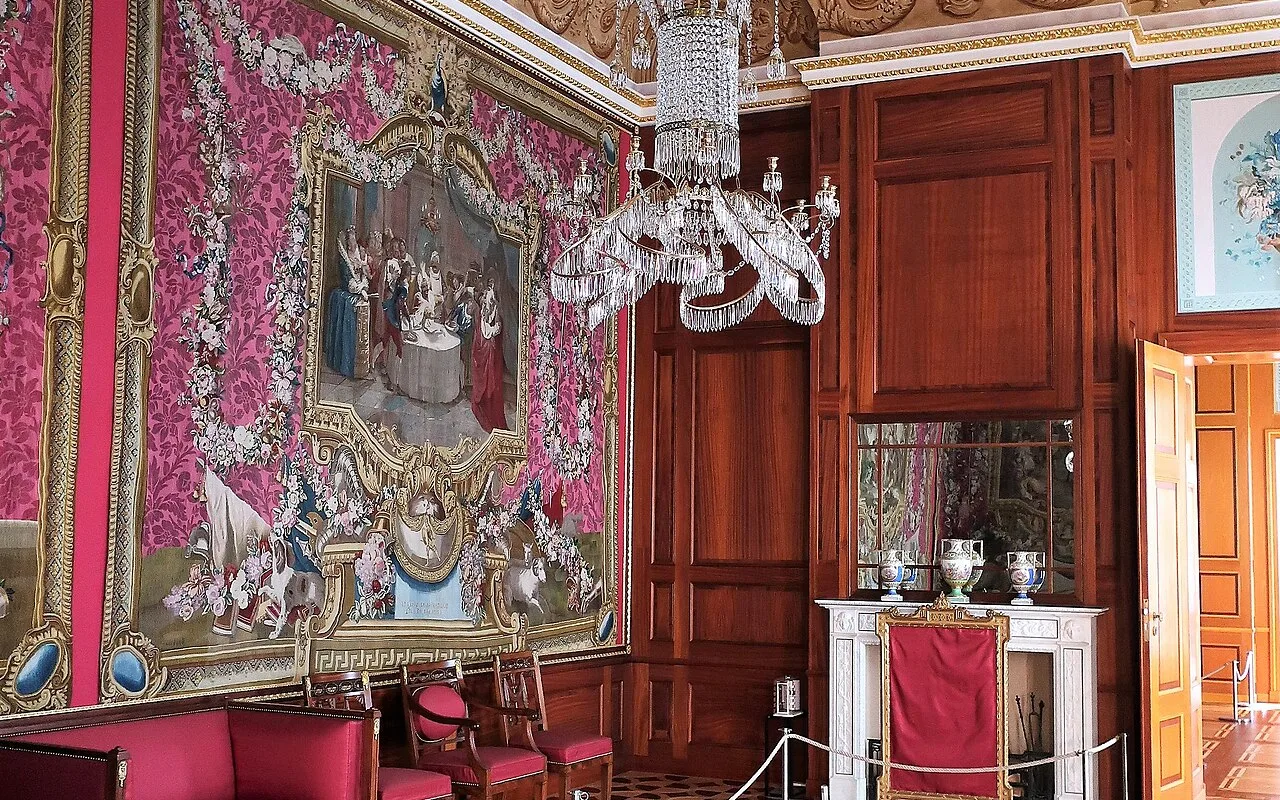
Reduced almost to ruins in the Second World War, Charlottenburg was painstakingly reconstructed over decades, and the care shows in every restored ceiling fresco and rehung tapestry. Today it offers one of the calmer, greener alternatives to central-Berlin crowds — a place to slow down, follow the audio guide room by room, and step three centuries back into the Prussian court.
Two longer readings
Charlottenburg is the largest palace in Berlin, and its highlights divide neatly between two eras. The Old Palace, built from 1695 for Sophie Charlotte, holds the celebrated Porcelain Cabinet, a room lined floor to ceiling with thousands of pieces of Chinese and Japanese blue-and-white porcelain, mirrored to multiply the effect into something dizzying. It remains one of the most photographed interiors in the city, so allow time to look up as the porcelain climbs the walls in tiers and continues across the ceiling cove. The cabinet sits within a sequence of Baroque state apartments — antechambers, the audience chamber and the bedchamber — arranged as a one-way enfilade, so follow the marked route rather than doubling back. The palace then shifts into full Rococo exuberance in the New Wing, added under Frederick the Great.
Its undisputed highlight is the Golden Gallery, a long ballroom whose pale green walls erupt in gilded stucco of shells, vines and garlands, widely regarded as one of the finest Rococo interiors in Europe. The adjoining White Hall served as the throne and banqueting room, and the wing also holds Frederick's apartments and a prized collection of eighteenth-century French painting. Behind the buildings stretch extensive gardens, laid out first in formal French style and later reshaped as an English landscape park threaded with lakes and shaded avenues. Three smaller treasures hide among them: the Belvedere teahouse, Queen Luise's neoclassical Mausoleum and Schinkel's New Pavilion. A smooth route runs through the Old Palace, on to the New Wing, and out into the gardens for the buildings. As an independent concierge service we arrange your timed entry so you walk straight in.
Charlottenburg Palace owes its existence to Sophie Charlotte, the cultured and politically astute wife of Frederick III, Elector of Brandenburg. In 1695 she commissioned a summer residence in the then-rural village of Lietzow, west of Berlin. The court architect Johann Arnold Nering designed the original Baroque building, crowned by a central cupola, and it was inaugurated on 11 July 1699 under the name Lietzenburg. Sophie Charlotte made it a centre of intellectual life, hosting philosophers and musicians, among them Gottfried Wilhelm Leibniz. After her early death in 1705 her grieving husband — by then King Frederick I in Prussia — renamed the estate Charlottenburg in her honour. The palace grew steadily over the following century. Johann Friedrich von Eosander extended it with side wings, a larger domed tower and an Orangery for overwintering rare plants.
Under Frederick the Great, the architect Georg Wenzeslaus von Knobelsdorff added the New Wing from 1740, bringing the White Hall, the throne and banqueting rooms and the glittering Golden Gallery. The gardens, first geometric and Baroque, were softened around the 1780s into an English landscape park, gaining the Belvedere and, later, the Mausoleum and the New Pavilion. The palace's significance lies in this layered survival: it is the most complete record of Prussian court taste from the Baroque through the Rococo into the neoclassical age. Severely damaged by bombing in 1943, it was painstakingly reconstructed over several post-war decades, and the care shows in every restored ceiling and rehung tapestry. Today it stands as the largest palace in Berlin. As an independent concierge service we secure timed entry so your day goes to the history.
Press play before the palace gates
Before you step inside, here's the quick story of how a summer villa became Berlin's grandest royal palace — and what to look for as you go.
Your full multilingual audio guide is included with admission and covers every room in far greater depth — collect it at the entrance or load the free app before you arrive.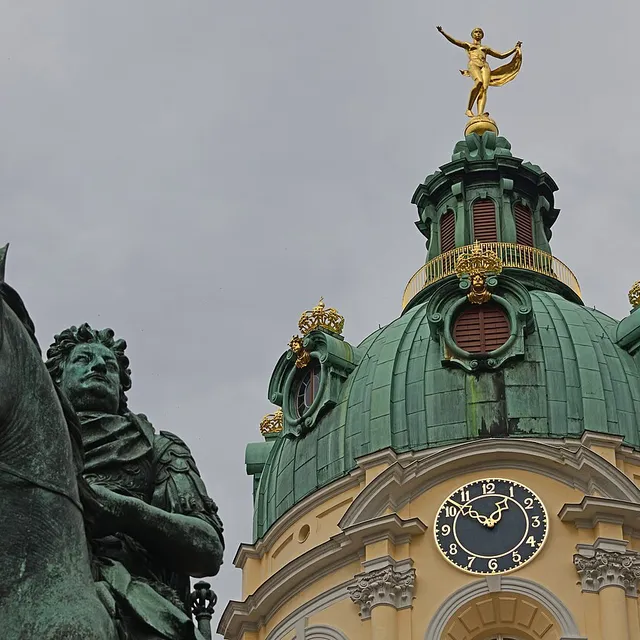
What the narration covers
From the U-Bahn to the Spree
Spandauer Damm 10–22, 14059 Berlin, Germany
U-Bahn Richard-Wagner-Platz (U7) or Sophie-Charlotte-Platz (U7), then a short walk; or bus M45 / 109 to Schloss Charlottenburg. S-Bahn Westend (S41/S42) is roughly 15 minutes on foot.
2–3 hours for the palace and audio guide; allow extra time to enjoy the gardens.
No dress code. Comfortable shoes recommended — the state apartments and gardens involve a lot of walking.
Ground-floor state rooms are largely step-free; some historic upper areas have stairs. Contact the concierge ahead if you need detailed access information for your visit.
The palace rooms are closed every Monday and open Tuesday to Sunday.
Six views

Reading for the day out
Each guide is written for a city-break visitor with half a day to spare; open the outline to see what it covers.
A concierge guide to quiet hours, the best light for the gilded interiors, and how Berlin's seasons reshape the baroque gardens.
Every realistic route from Mitte and BER Airport — U-Bahn, S-Bahn, bus, taxi and driving — with the stops, lines and walking times that actually matter on the day.
A room-by-room and garden-by-garden walkthrough of Berlin's grandest royal residence — and the visit order that keeps you out of the crowds.
From a queen's summer retreat to the largest royal palace in Berlin: who built Charlottenburg, why it grew, and why it still matters.
What kids love, where to picnic and play, and the practical family tips that make a baroque palace day in Berlin easy.
Questions
Yes. Every ticket we offer includes the multilingual audio guide at no extra cost. It's available on-site and via a free smartphone app, and it walks you through the palace room by room with the history of each space.
Yes. Your ticket is reserved for a specific day, so please select the date you plan to visit at checkout. You'll receive instant confirmation, with your e-ticket to follow.
The reduced rate covers students, seniors, and eligible concessions such as people with a recognised disability. There is a single concession category. Valid proof must be shown at the gate.
Young children under the operator's free-entry threshold (around 7 years old) generally enter without a paid ticket. If you're unsure for your child's age, contact our concierge team before booking and we'll confirm.
Your dated e-ticket lets you head straight to the entrance rather than queuing for the on-site ticket desk. At peak times this can save a significant wait, especially on summer weekends.
Your e-ticket is emailed to you after booking —. Just show it on your phone at the palace entrance on the day of your visit.
If you booked a reduced ticket, bring the relevant proof — a student card, senior or disability ID — as it is checked at the gate. Standard adult tickets don't require ID.
Tickets are reserved for a specific date, so please check your plans before booking. If you need to make a change, contact our concierge team as early as possible and we'll readily assist; all sales are final once entry is secured on your behalf.
No. We are an independent concierge ticket service. We reserve and confirm your dated entry on your behalf, include the audio guide, and provide support in your own language so your visit is effortless from booking to gate.
The palace is closed every Monday. It is open Tuesday to Sunday, with seasonal hours: 10:00–17:30 from April to October and 10:00–16:30 from November to March.
Most visitors spend 2–3 hours in the palace with the audio guide. If you want to explore the gardens, the mausoleum and the garden pavilion too, allow a half or full day.
Don't miss the Porcelain Cabinet, packed floor to ceiling with thousands of porcelain pieces, and the Golden Gallery — a 42-metre rococo ballroom of mirrors and gilding. The New Wing holds Frederick the Great's apartments and fine French paintings.
Late mornings and weekend afternoons are the busiest. For a quieter visit, aim for a weekday or arrive close to opening at 10:00. Booking a dated ticket means you skip the on-site desk regardless.
Charlottenburg Palace (Schloss Charlottenburg) is the largest palace in Berlin and the most complete surviving example of Prussian Baroque and Rococo architecture in the German capital. Construction began in 1695, when Sophie Charlotte, wife of Elector Frederick III, commissioned a summer residence in the then-rural village of Lietzow; the estate was renamed in her memory after her death in 1705. Successive Prussian rulers expanded the palace across the eighteenth century, producing the Baroque Old Palace, with its celebrated Porcelain Cabinet of thousands of pieces, and the Rococo New Wing of opulent state apartments. Behind the buildings stretch extensive gardens, laid out first in formal French style and later reshaped as an English landscape park. Reduced almost to ruins during the Second World War, the palace was painstakingly reconstructed over several decades and stands today as a major heritage site.
Charlottenburg Palace is well worth visiting, and it offers one of the calmer, greener alternatives to central Berlin's busier sights. As the largest palace in the city, it presents the most complete picture of how Prussia's kings and queens actually lived, from the Baroque state apartments and the extraordinary Porcelain Cabinet to the Rococo splendour of the Golden Gallery. The interiors are genuinely striking, and the multilingual audio guide brings each room to life at your own pace. Beyond the palace walls, the extensive gardens are free to enter and reward an unhurried stroll, with a lake, shaded avenues and the Belvedere, Mausoleum and New Pavilion dotted through the grounds. That combination of grand interiors and open parkland makes the estate a satisfying half or full day for couples, history lovers and families alike. Reconstructed with great care after wartime damage, Charlottenburg Palace remains a major and rewarding German heritage site.
The best time to visit Charlottenburg Palace is early in the day, close to opening, when the state rooms are at their quietest before tour groups and walk-up visitors build through late morning. Arriving with dated entry already arranged lets you step into near-empty staterooms, where the narrow Porcelain Cabinet and Golden Gallery feel far more atmospheric. The palace opens Tuesday to Sunday and is closed every Monday, though the gardens stay open year-round and free of charge. By season, late spring and early summer bring the gardens into full leaf and the longer summer opening hours, while autumn offers golden foliage and thinner crowds. Winter is quiet and atmospheric, with shorter interior hours and crisp light on the frosted parterres. Whenever you come, the gardens open earlier than the palace, so a morning walk along the lake before your timed entry is one of the calmest experiences in western Berlin.
Yes, the 55 hectares of Baroque and English-landscape gardens are free to enter. Your palace ticket covers the interiors; the surrounding park is open to everyone at no charge.
Charlottenburg Palace stands on Spandauer Damm in the Charlottenburg district of western Berlin, a little apart from the city's central sightseeing core but easily reached by public transport. The most direct approach is the U7 underground line: alight at Richard-Wagner-Platz, the closest station, or at the neighbouring Sophie-Charlotte-Platz, and walk roughly ten minutes to the palace forecourt. On the overground network, the S-Bahn Ringbahn lines call at Westend station, about fifteen minutes away on foot. Buses stop closer still: routes M45 and 109 set down passengers near the palace gates, leaving only a brief walk to the entrance. Drivers will find the address at Spandauer Damm 10–22, 14059 Berlin, with limited paid parking nearby that fills quickly on weekends and in summer. Allow around thirty to forty-five minutes from the central Mitte area, depending on your starting point and connections.
Many ground-floor state rooms are largely step-free, though some historic upper areas have stairs. If you need detailed accessibility information, contact our concierge team and we'll help you plan.
Yes. The gardens are free and open to all, so you can stroll the grounds even if you don't enter the palace interiors. Many visitors combine a garden walk with their palace visit.
Checked against: Official visitor information · Berlin.de (city tourism) · Introducing Berlin guide Last checked: